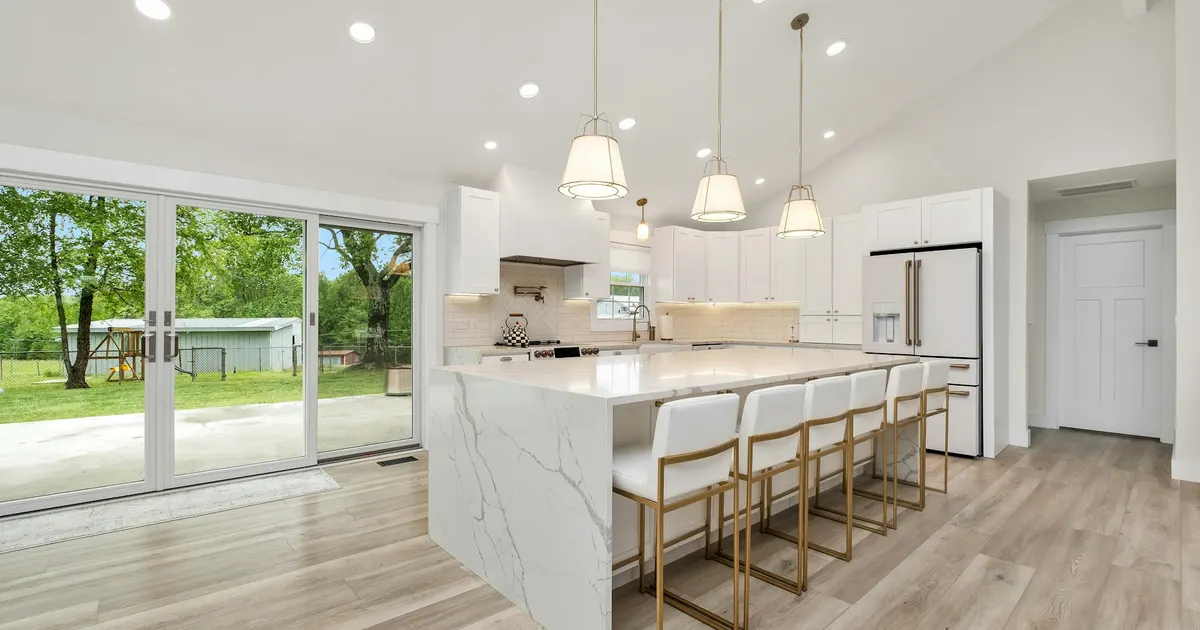
Luxury vinyl plank, usually shortened to LVP, is now specified on a large share of multifamily, hospitality and commercial projects. When a project team weighs it against engineered hardwood, the comparison is often made on price alone. Price matters, but the two floors also differ in how they feel, how they sound, how they wear and how they are repaired. This article compares them for project work, and is clear about where LVP is the better fit.
LVP is more than one product
“LVP” covers several constructions, and they behave differently. Before comparing with oak, it helps to know which one is on the table.
| LVP type | Construction | Installation | Typical traits |
|---|---|---|---|
| Glue-down (dry back) | Thin, flexible vinyl layers with a printed film and clear wear layer | Fully adhered to the subfloor | Quiet in the room, follows the subfloor closely |
| Floating, rigid core (SPC) | Printed vinyl layers over a dense mineral and PVC core | Floating, with a click or locking edge | Fast to install, tolerant of minor subfloor flaws |
| Floating, rigid core (WPC) | Printed vinyl layers over a foamed plastic composite core | Floating, with a click or locking edge | Softer underfoot than SPC, also fast to install |
All three share the same top: a printed wood image under a clear wear layer and a factory coating. What changes is the core and the installation. We cover the rigid core type in more detail in engineered hardwood vs SPC flooring.
How engineered oak is built
Engineered oak has a face of real wood. At Vu Uy Wood that face is sawn French White Oak, bonded to a stable plywood core in our 2-layer construction, or laid over a cross-layered core with a backing layer in our 3-layer construction. The edges carry a tongue and groove (T&G) profile on all four sides. The oak face can be sanded and finished again, which is the main point of difference from any LVP.
Feel and sound underfoot
Glue-down LVP is thin and fully bonded, so it feels firm and quiet in the room. It also follows the subfloor closely, which means every hump, trowel ridge or joint in the subfloor can show through the surface. Subfloor preparation is a larger share of the job than many budgets allow for.
Floating rigid LVP bridges small subfloor flaws, but a floating floor can sound hollower under hard shoes than one that is bonded down.
Engineered oak is usually glued or nailed down. It feels solid and has the slight give and natural warmth to the touch of wood. In apartment buildings, the sound that reaches the unit below depends on the whole assembly, so any of these floors needs the right underlay or acoustic layer for the building’s rules. See oak flooring for apartments.
Surface, wear layer and wear
On LVP, the protection is the clear wear layer, measured in mils, plus a factory coating. It resists scuffing and is easy to clean, which is why LVP suits high-turnover units and busy corridors. Two points are worth checking with the maker: how the product handles heavy static loads such as furniture legs, and how it handles rolling loads such as chairs and carts. Once the wear layer is worn through, the print below wears with it.
On engineered oak, the wear layer is solid oak. Ours is sawn, with 3mm and 6mm as standard builds and other thicknesses made to order. Daily protection comes from the finish. A worn finish can be recoated, and deeper wear or a change of color can be handled by full sanding within the oak wear layer. The wear layer guide explains that relationship.
Repair over the life of the floor
| Damage | LVP | Engineered oak |
|---|---|---|
| Light surface wear | Clean and maintain per maker | Clean, then recoat the finish |
| Worn traffic path | Replace affected planks | Recoat, or sand and refinish the area |
| Deep gouge or burn | Replace the plank | Fill, or replace the board |
| Change of color | Replace the floor | Full sanding and new finish within the wear layer |
| Design discontinued | Spares must be kept from the original lot | New boards can be made to the approved color sample |
The last row matters on phased projects. An LVP design can be withdrawn by its maker. A made-to-order oak floor is produced against an approved physical sample, and repeat orders are checked against the same master reference.
Water and the subfloor
LVP has a clear advantage with water. Its layers do not swell with water the way wood does, so it is a sensible choice for kitchens and baths in rental units, back-of-house areas and below-grade rooms. That makes it water resistant, not unaffected by water. Water that reaches the subfloor through joints or at the perimeter can still cause problems, and a glue-down LVP adhesive has its own moisture limits for the slab.
Engineered oak also needs a dry, tested subfloor and a stable indoor climate. Over concrete, the slab is tested before installation, and the adhesive maker sets the limits. Our article on engineered oak over concrete covers what to specify. In both cases, the testing standards and limits come from the installer, the adhesive maker and the NWFA installation guidelines, not from the factory.
Heat and sunlight
Vinyl moves with temperature. Rooms with large sunlit windows, unconditioned spaces and long runs are all subject to the LVP maker’s rules, and glue-down products may need a specific adhesive in sunlit areas. Wood moves mainly with humidity. Over radiant heating, both can be used within the heating maker’s limits.
When each one fits
| Project area | Usually points to | Why |
|---|---|---|
| Rental unit kitchens and baths | LVP | Spill tolerance, low cost, simple replacement |
| Back-of-house and service corridors | LVP | Easy cleaning, tolerance of water |
| Below-grade amenity rooms | LVP | Moisture risk from the slab |
| Hotel guest rooms and suites | Either, by brand standard | Oak for character and refinishing, LVP for turnover |
| Lobbies, lounges, restaurants | Engineered oak | Real wood, refinishing instead of replacement |
| For-sale residences | Engineered oak | Real wood face, long-term value of a renewable surface |
| Feature areas with herringbone or chevron | Engineered oak | Pattern formats made to a drawing |
Specifying both on one project
Mixed specifications are common: oak in public areas and living rooms, LVP in wet rooms and back of house. Plan these points early.
- Heights. Our engineered boards run from 3/8” (10mm) to 13/16” (21mm) overall. LVP is usually thinner. Decide the transition detail or subfloor build-up at each junction.
- Color. Choose the LVP first if it is fixed by a brand standard, then develop the oak color against a physical sample of it.
- Sequence. Both floors go in after wet trades are finished and the building’s climate is running. The installer sets the sequence.
Working with Vu Uy Wood
Vu Uy Wood manufactures made-to-order solid and engineered French White Oak flooring in Song Than 3 Industrial Park, Ho Chi Minh City, and has done so since 2006. We make real oak flooring with a tongue and groove profile only, and we do not make LVP. For mixed specifications, describe the adjoining floors on the contact page or build the oak specification on the Specify page, and heights and colors are reviewed with it. We normally reply within one working day.