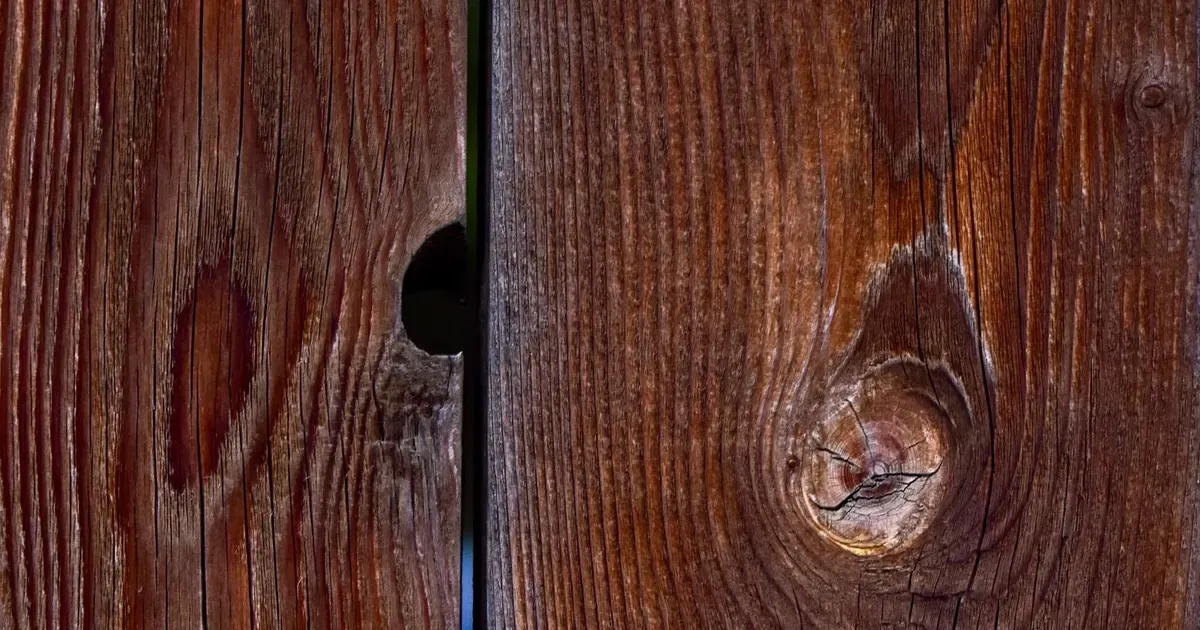
Oak is a natural material, and natural material has features: knots where a branch once grew, small splits called checks, and the occasional pin hole or open pocket. In a grade that allows them, those features are either left open or filled. Filling is a manufacturing step with its own materials and color work, and it explains why two floors of the same grade can look quite different. This guide explains what gets filled, how the filler is matched to the finished color and how to judge the result on a sample.
What gets filled
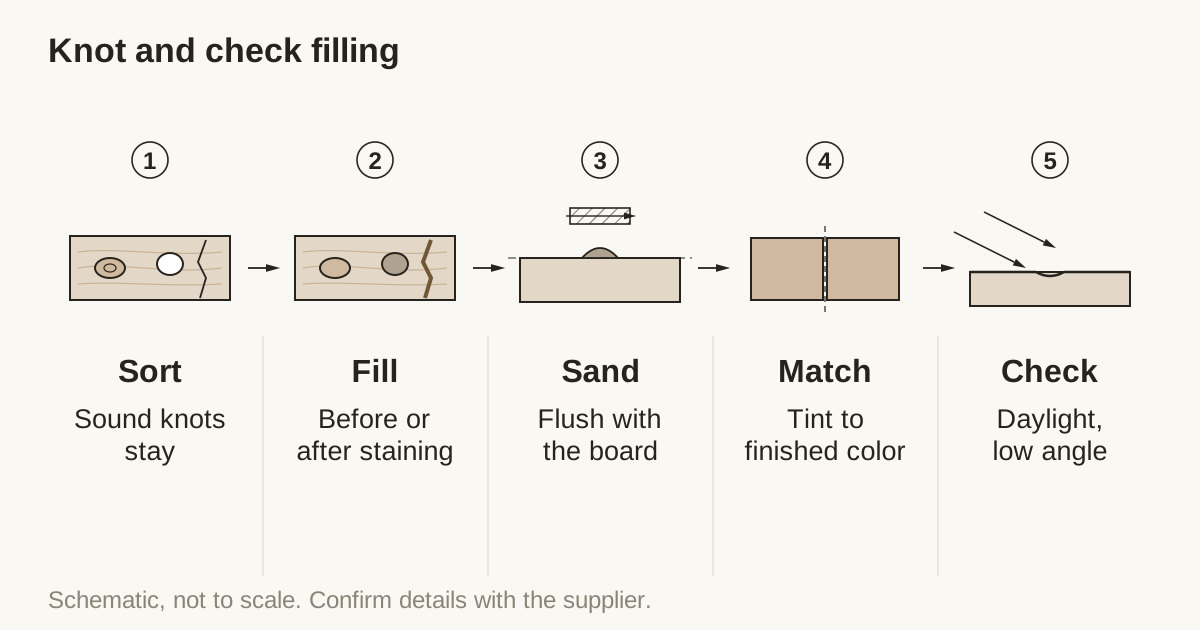
Not every feature is treated the same way. A producer sorts features by what they do to the board.
- Sound knots. A tight knot is firmly joined to the surrounding wood. It is part of the character of the board and is often left as it is, because it is strong and stable.
- Open or loose knots. A knot that has shrunk away from its surroundings, or has a gap around it, can lose pieces in use. These are filled so the surface is closed.
- Checks and small splits. Fine cracks that open along the grain are filled so dirt does not collect and the crack does not widen.
- Pin holes and small pockets. Small voids on the face are filled so the surface reads as intact.
- Bark pockets and mineral streaks. Mineral streaks are color, not a defect, and are left. Bark pockets are filled.
Which of these a floor allows is set by its grade. In the grades on our Specify page, Premium has very few knots, Select has small sound knots, Natural has visible knots and color movement, and Rustic has larger sound knots and filled natural features. See the grades explained article for the full descriptions.
What the fillers are
Several filler families are used in wood flooring, and each has trade-offs.
| Filler type | Typical behavior | Trade-off |
|---|---|---|
| Wood putty or paste filler | Easy to work, can be tinted, sands well | May shrink slightly as it dries |
| Epoxy or two-part resin | Hard, stable, good for larger voids | Takes stain differently, harder to color match |
| Polyester or similar resin | Fast curing, sands flat | Can show as a distinct patch if color is off |
| Hard wax filler | Soft and workable | Suited to site repair more than factory work |
The choice depends on the size of the feature, the finish system and the color. A fine check needs a thin, flexible filler. A large open knot needs a harder one that will not shrink out. We do not publish the filler system used at Vu Uy Wood on this page, and it is part of what is confirmed on the sample and at quotation for your finish.
Why color matching is the hard part
Wood takes stain by absorbing it. A filler does not absorb in the same way. That is the root of the difficulty: stain that colors the wood evenly can leave a filled patch lighter, darker or flat in tone.
Two approaches are common.
- Fill before staining. The filler is applied, sanded flush, and then the whole board is stained. The filler takes the stain differently from the wood, so the patch can read as a light or dark spot. Some producers use a filler designed to take stain to reduce the difference.
- Fill after staining. The board is stained first, and the filler is tinted to match the finished color and applied to the feature. This gives better control, but each color needs its own tint, and the filler has to match under the topcoat.
Both are used in practice, and a floor may use a mix. What matters to the buyer is that the filled areas are checked against the approved color on a physical board. The article on approving flooring color on a physical sample shows how to do it.
How finish and color change the look
Fill is easiest to hide in a dark, low-sheen, textured finish, and hardest to hide in a light, smooth, clear one.
- Dark colors tend to blend fill into the surrounding wood. The contrast between filled and unfilled areas is lower.
- Light colors and clear finishes show the filler as a distinct patch, because there is no stain to cover the difference. See clear UV against color UV.
- Wire brushed texture breaks up the patch, since the surface relief disturbs the line between filler and wood.
- Gloss highlights the difference in surface texture between filler and wood. Lower sheens hide it.
- Color and effect finishes such as smoke or wash react to features. Filled knots and other natural features can take effect differently from the clear wood, so review several boards. The color and effect UV article covers this.
If the aim is a floor with no visible fill at all, the practical answer is a cleaner grade, not a better filler.
Features that stay open
Some natural features are left alone on purpose. A tight knot with a sound edge, a fine surface check that does not run through the board and a small mineral streak are part of how oak looks, and filling them would make the floor look repaired. How much is left open depends on the grade. A Premium or Select face has few features to treat, so the question rarely arises. A Natural face keeps its sound knots visible. A Rustic face carries larger sound knots and filled natural features, so the filling is part of its look.
The decision belongs in the specification. Write whether you expect knots to be visible, and whether open features should be closed. A buyer who wants a rustic look with open character and a buyer who wants a rustic look with every feature closed are asking for two different floors, even though both write Rustic in the RFQ.
What can go wrong
Most problems with filled features show up in service, not on day one.
- Shrinkage. A filler that shrinks pulls away from the edge of the knot and leaves a ring or a dip.
- Cracking with movement. Wood moves with humidity, and a rigid filler can crack at the boundary as the board moves. This is more visible on wide boards.
- Color shift. Fillers and wood age differently under light. A patch that matched at installation can drift over time.
- A knot that falls out. A loose knot that was not found and filled can drop out, leaving a hole. This is why loose knots are sorted at production.
- Edge chipping. The surface of a filled patch can be softer than the wood around it, and it can mark sooner under heavy use.
A floor with a good filling process has fewer of these, but cannot have none. The stability of wood is a limit that a filler can follow but not cancel.
How to judge a sample
A sample should show the features that production will contain, not only the best board in the set.
- Ask for boards that show the grade’s features. A Rustic floor sample should include filled knots and checks, not a clean board.
- View in daylight and room light. Fill that disappears under one light can show under another.
- Look from a low angle. A patch with a different sheen or a slight dip is easy to see at an angle.
- Touch the surface. The filled area should be flush with the board.
- Compare several boards. The way features are treated should be consistent across the sample set.
- Record what you approved. Photograph the approved boards, mark the features on the sample and keep the record.
Writing it into the specification
- State the grade, and describe what you expect in words: filled or open features, and how visible.
- Say whether open knots and checks should be filled, and whether fill should match the face color.
- Name the finish system, the sheen and the texture, because they decide how fill reads.
- Send a physical reference if the look matters, and mark the features you want to avoid.
- Ask for the filler approach to be stated at quotation.
Questions to ask
| Question | A clear answer covers |
|---|---|
| Which features are filled? | Knots, checks, pin holes, pockets |
| Is the filler matched to the finished color? | Before or after staining |
| How is a loose knot handled? | Sorted out or filled |
| Is the sample typical of the lot? | Features shown as they will be in production |
| How is the fill checked? | Visual check against the approved sample |
Working with Vu Uy Wood
Vu Uy Wood manufactures solid and engineered French White Oak flooring to buyer specification in Song Than 3 Industrial Park, Ho Chi Minh City, and has done so since 2006. Grade is chosen on the Specify page, and the filled features of a grade are reviewed with you on a physical sample. We normally reply within one working day.