A flooring size is four numbers, not one: length, width, overall thickness and wear layer. Buyers often fix the first two by eye and leave the last two to the supplier, and that is where most mismatches between quotations start. This page puts every size we run and make to order on one chart, explains how to read a size line in a quotation, and gives a short order of decisions so each number is chosen for a reason. Each topic has its own detailed guide, linked below, so this page stays a quick reference.
How to read a size line
On a quotation or packing list, a board size is usually written in one line, in this order:
Length x width x overall thickness / wear layer
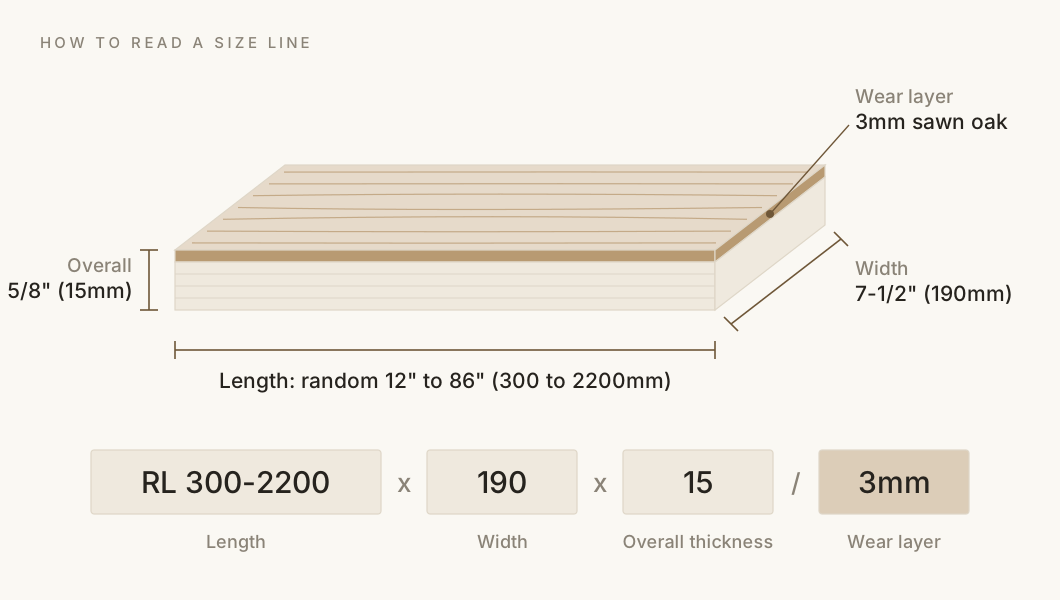
For example, RL 300-2200 x 190 x 15/3mm means:
- RL 300-2200: random length, boards from 12” to 86” (300 to 2200mm) mixed in the cartons.
- 190: face width of 7-1/2” (190mm).
- 15: overall thickness of 5/8” (15mm), the height of the board from face to underside.
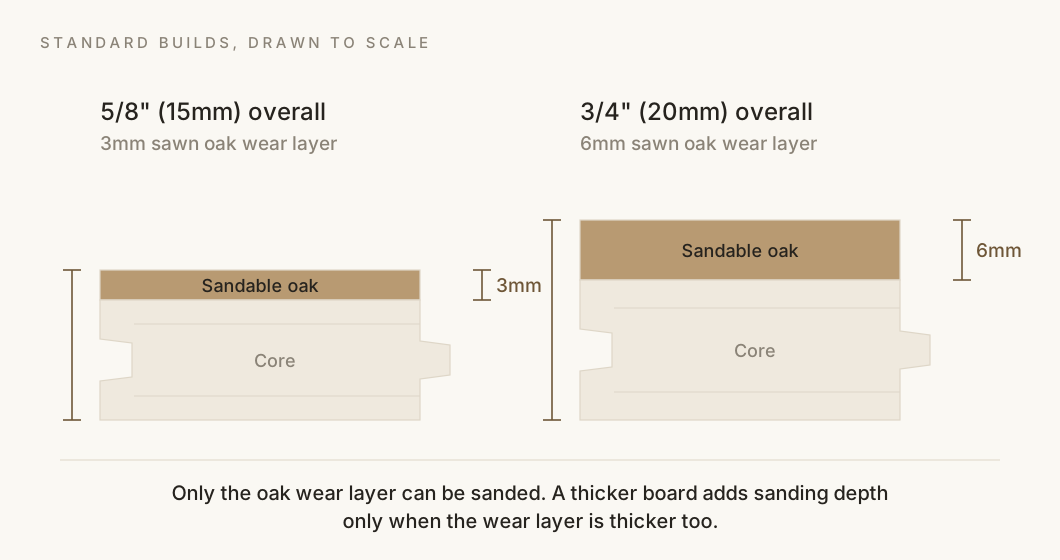
- /3: a 3mm sawn oak wear layer on top, the only part of an engineered board that can be sanded.
A fixed-length order replaces “RL 300-2200” with one number. A solid board has no wear layer figure, because oak runs through the full thickness. If a quotation gives only width and overall thickness, ask for the wear layer and the construction before comparing prices. Our guide to comparing flooring quotes covers the other lines to check.
The size chart
Sizes marked current production are builds we already run. The others are made to order and confirmed on the specification.
| Dimension | Current production | Made to order |
|---|---|---|
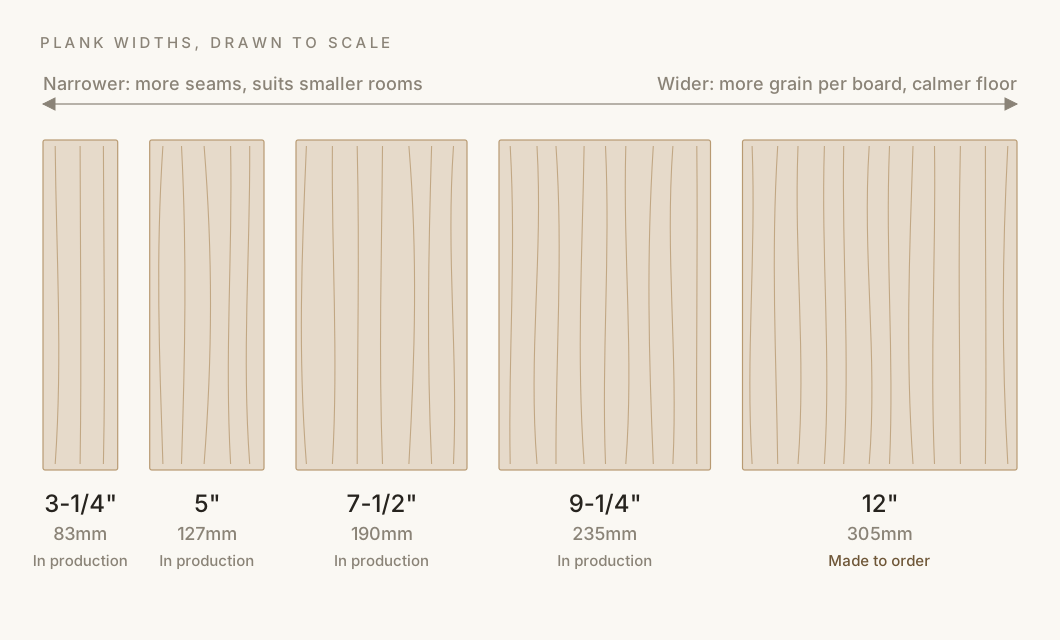
| Plank width | 3-1/4” (83mm), 3-1/2” (89mm), 5” (127mm), 6” (152mm), 7-1/2” (190mm), 9” (229mm), 9-1/4” (235mm) | 3” (76mm), 4” (102mm), 5-1/2” (140mm), 7” (178mm), 8” (203mm), 10” (254mm), 11” (280mm), 12” (305mm) |
| Plank length | Random length 12” to 86” (300 to 2200mm) | One fixed length, or long boards up to 118” (3000mm) |
| Herringbone block | Produced in 3-1/4” (83mm), 3-1/2” (89mm), 5” (127mm), 7-1/2” (190mm) and 9” (229mm) widths | Any width from 3” (76mm) to 12” (305mm); one fixed block length per order, set from the drawing |
| Chevron block | Width and 45° or 30° angle set from the drawing | One fixed block length per order |
| Overall thickness | 5/8” (15mm) and 3/4” (20mm) | 3/8” (10mm), 1/2” (12mm), 9/16” (14mm), 11/16” (18mm), 13/16” (21mm) |
| Wear layer (sawn) | 3mm on 5/8” (15mm), 6mm on 3/4” (20mm) | 0.6mm, 1.2mm, 2mm, 4mm, 5mm, paired with an overall thickness on the specification |
For a size not on the chart, the “Other width” and “Other thickness” fields on the Specify page let you state it, so the sample is made to the real build.
Choose in this order
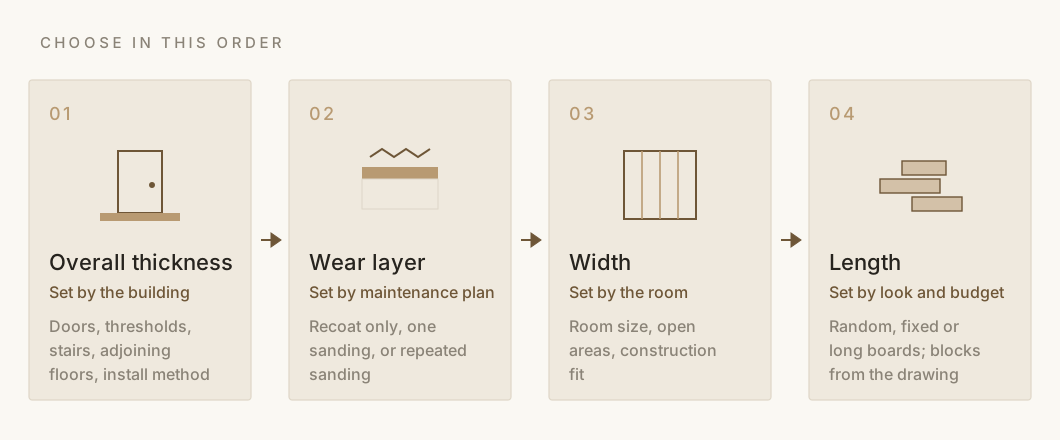
The four numbers depend on each other, so the order of decisions matters. Working from the building outward saves a revised quotation later.
1. Overall thickness: set by the building
Overall thickness decides finished floor height, so it is fixed by what the floor has to meet: door leaves, thresholds, stair nosings and the finishes in adjoining rooms. Measure the available height first, especially in renovation. The installation method also has a say, because nail-down needs enough material above and below the tongue for the fastener the installer intends to use. Details are in the oak flooring thickness guide.
2. Wear layer: set by the maintenance plan
The wear layer decides how much oak is left for full sanding over the life of the floor. A thicker overall board does not add sanding life unless the wear layer is also thicker. The question to ask the owner is simple: will this floor be maintained by recoating only, or is a full sanding expected in future?
| Maintenance plan | Wear layer direction |
|---|---|
| Recoating only, for example a fit-out with a planned replacement | A thinner wear layer can be reasonable |
| One full sanding expected in the floor’s life | A mid-range wear layer such as 3mm |
| Repeated sanding expected, long ownership | A thick wear layer such as 6mm, or solid oak |
We do not state a number of years or a number of refinishes for any wear layer. How much oak each sanding removes depends on the floor, the equipment and the operator, and deep wire-brushing that has to be sanded out uses part of the depth too. The wear layer guide explains this in full.
3. Width: set by the room
Width changes the visual scale of the room. Wider boards show more grain per board and give a calmer floor with fewer seams; narrower boards suit smaller rooms and corridors and are often more economical. Width also narrows the construction choice: 3-layer engineered is well suited to wider boards and larger open areas where dimensional stability matters, while solid is best suited to narrower boards. See the plank width guide, and the wide plank guide for anything above 7-1/2” (190mm).
4. Length: set by the look and the budget
Random length staggers end joints naturally and uses the timber efficiently. Fixed length gives a regular, architectural rhythm but uses more timber per square foot. Long boards reduce end joints and suit large rooms, paired with wider faces. The trade-offs are in random length vs fixed length.
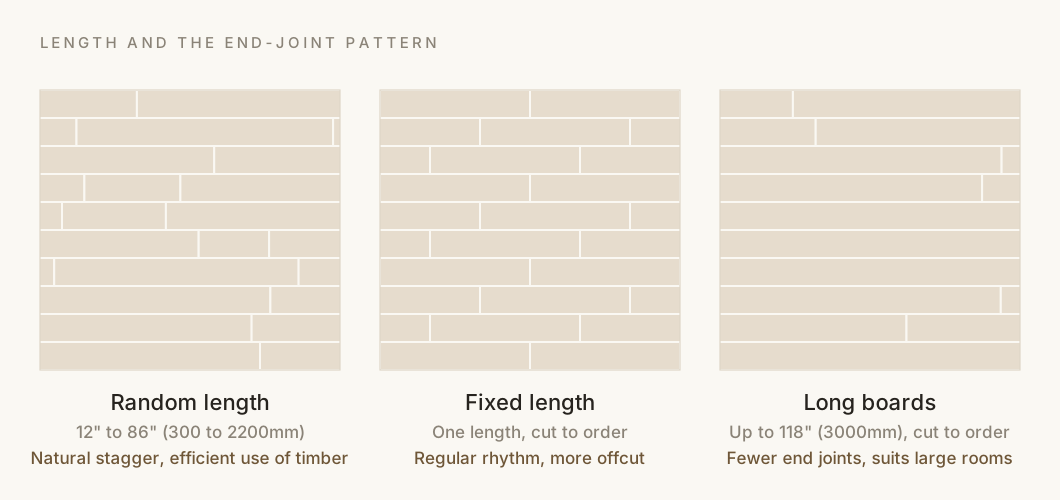
For herringbone and chevron, length is not a free choice. The block length sets the geometry of the pattern, so it is fixed for the whole order from the buyer’s drawing. The herringbone block proportions guide shows how width and length set the scale of the pattern.
Size and price, in general terms
Larger sizes generally cost more per square foot, for the same reason in each case: they need larger, clearer pieces of oak, and fewer pieces qualify.
- Wider faces need wider clear stock, so less of each log is usable.
- Longer and fixed lengths produce more offcut than random length.
- Thicker wear layers put more oak into every square foot.
- Cleaner grades add to all three, because knots must fall outside the board.
These effects add together. A Natural or Rustic grade in random length and a mid-range width is the most efficient combination; Premium grade in wide, long, fixed-length boards with a thick wear layer is the least. Actual figures depend on the timber lot and the full specification, and are confirmed in the quotation. Our article on oak flooring grades explains how grade affects yield on its own.
Size checklist for the RFQ
| Line | What to state |
|---|---|
| Construction | Solid, 2-layer or 3-layer engineered |
| Overall thickness | One figure, plus any floor-height limit |
| Wear layer | Exact thickness, sawn |
| Width | Face width, imperial and metric |
| Length | Random length, one fixed length, or block length from the drawing |
| Format | Plank, herringbone, chevron or parquet to drawing |
| Installation method | Glue-down or nail-down, per area |
| Quantity | Square feet per size, if the project uses more than one |
More than one format or board size can be produced within one order under the same approved color reference. If two sizes meet in the same floor, specify the same overall thickness for both, or show the transition on the drawing.
Working with Vu Uy Wood
We manufacture solid and engineered French White Oak flooring to buyer specification in Song Than 3 Industrial Park, Ho Chi Minh City, and have done so since 2006. Our standard builds are 5/8” (15mm) with a 3mm sawn wear layer and 3/4” (20mm) with a 6mm sawn wear layer, in seven widths in current production, with other thicknesses, widths and lengths made to order. The Specify page turns construction, thickness, width, format, grade and finish into a written brief we can quote. We normally reply within one working day.