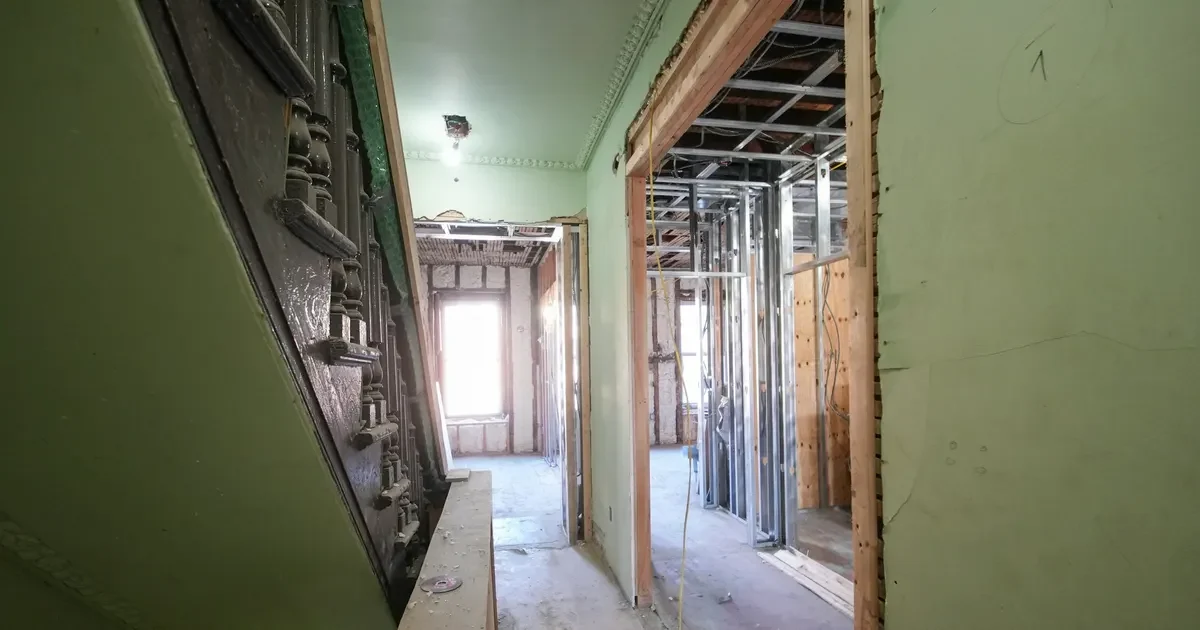
A wood floor can be made exactly to specification and still fail on site because it went down at the wrong point in the program. Installed too early, it takes up moisture from fresh plaster, screed and paint, or it is damaged by trades that come after it. Installed too late, it holds up handover. The right slot is not a single date. It is a set of conditions the building has to meet before the cartons are opened. This article sets out those conditions in order, how prefinished and site-finished floors fit differently into the schedule, and how to time delivery from the factory so the boards arrive when the site is ready for them.
The principle: wood goes in when the building behaves like a building
Oak responds to the moisture in the air and in the surfaces around it. During construction, a building is full of water: concrete and screeds drying out, plaster and joint compound, tile adhesive, paint. Openings let in rain and humidity, and temperature swings from day to night.
A wood floor should go in once the building is enclosed, the wet trades have dried, and the indoor conditions are close to what the occupants will live with. The NWFA installation guidelines describe the job-site conditions to be met before installation, and the installer applies them. Our article on cupping and crowning shows what happens to boards when the conditions are wrong.
The usual sequence
| Stage | What must be complete before flooring | Confirmed by |
|---|---|---|
| Building envelope | Roof, windows and exterior doors installed and closed | General contractor |
| Wet trades | Plaster, drywall finishing, screeds and tile done and dried | General contractor, installer |
| Building services | HVAC operating at normal service conditions | General contractor, mechanical contractor |
| Subfloor | Tested, flat, clean and approved for the method | Installer, adhesive maker |
| Overhead work | Ceilings, high-level painting and lighting mostly done | General contractor |
| Flooring delivery | Site conditions confirmed, dry storage ready | Installer, buyer |
| Installation | Room cleared of other trades | Installer |
| Protection | Floor covered before trades return | General contractor, installer |
| Final trades | Baseboards, final paint coat, fixtures | General contractor |
Each line depends on the one before it. If the HVAC is not yet running, a subfloor moisture test does not describe the conditions the floor will live in, and the result may need to be repeated. Our article on concrete moisture testing explains why test timing matters.
Wet trades come first
Plaster, joint compound, concrete toppings, self-leveling screeds and tile setting materials all release moisture as they dry. Wood laid in the same rooms takes up part of it. The safe rule is simple: wet trades finish, the building is ventilated or conditioned, and the installer confirms conditions before the floor goes in. How long drying takes depends on the materials, thicknesses and climate, and the product makers’ data sheets are the reference for that, not a general rule.
HVAC running at service conditions
The heating, cooling and ventilation systems should be operating as they will be in normal use, not switched off at night or replaced by temporary heaters that add moisture to the air. This is the condition that most often slips in a busy program, because the systems are commissioned late. Where the slab contains radiant heating, the heating system maker sets its own start-up and operating procedure before flooring.
Before or after paint and trim?
Practice varies by project, but a common order is:
- Ceilings and walls primed and given their main coats.
- Flooring installed.
- Floor protected.
- Baseboards and trim fitted over the floor.
- Final touch-up coat of paint.
Fitting baseboards after the floor lets the trim cover the perimeter gap and sit tight to the finished surface. Leaving the last coat of paint until after the floor means any marks from trim fitting are covered. Painting before the floor reduces the risk of drips and ladder marks on the finished surface. The general contractor and the installer agree the exact order.
Kitchen units, built-in joinery and heavy fixed items need a decision too. Some projects install the floor first and set units on it; others fit units first and run the floor to them. For floating floors, heavy fixed units are generally not set on top of the floor. The installer sets the rule for the method used.
Prefinished or site-finished: two different schedules
The finish route changes how much time the floor needs on site.
- Prefinished boards arrive with stain and topcoat already applied and cured on the factory line. Once installed, the floor can be protected and other trades can return, subject to the adhesive’s cure time.
- Unfinished boards are sanded, coated and cured on site. The rooms must be cleared, kept free of dust and traffic, and ventilated while the finish cures. Other trades stay out for that period.
On a tight program, the difference can decide which route is chosen. Our comparison of unfinished vs prefinished oak flooring covers the trade-offs, including consistency across phases.
Protecting the finished floor
Once installed, a floor shares the building with other trades until handover. Protection should go down straight away:
- Use a breathable protection product suited to prefinished wood floors, and follow the finish maker’s guidance on what can touch the surface.
- Avoid sealing the floor under plastic sheeting that traps moisture.
- Avoid taping directly to the finish unless the tape is approved for it.
- Keep grit off the protection, since it works through to the surface.
- Plan routes for ladders, scaffolds and heavy deliveries.
Protection is removed for final cleaning just before handover.
Timing the delivery from the factory
An export order involves production, packing and shipping, so the boards are scheduled well in advance of the floor slot. Two mistakes are common: boards arrive too late and the floor holds up the program, or they arrive too early and sit in a building that is still wet.
- Plan the order against the program. The production and shipping schedule for your order is confirmed in the quotation. Work back from the installation window, not from the date the subfloor is poured.
- Store off site if the building is not ready. Cartons are packed, palletized and wrapped at the factory, but they should be stored somewhere enclosed, dry and conditioned until the site meets the conditions above.
- Keep cartons closed until the installer says so. Acclimation follows the installer’s instructions for the product and the site.
- Check labels on arrival. Our carton labels identify the SKU and production lot. Keeping one lot within one area makes the floor more uniform.
The steps from specification to container are set out in the hardwood flooring order process.
Phased projects
On multi-floor or multi-stage projects, flooring may be installed in phases months apart. Agree in advance whether each phase is a separate order or a single order delivered in stages. With prefinished boards, each later phase is checked against the same approved master as the first, which helps keep color consistent across the building.
Working with Vu Uy Wood
Vu Uy Wood manufactures made-to-order solid and engineered French White Oak flooring in Song Than 3 Industrial Park, Ho Chi Minh City, and has done so since 2006. Our drying, finishing and packing steps are shown on the Production page. Tell us the installation window and any phasing along with your selections on the Specify page, and the order schedule is confirmed in the quotation. We normally reply within one working day.