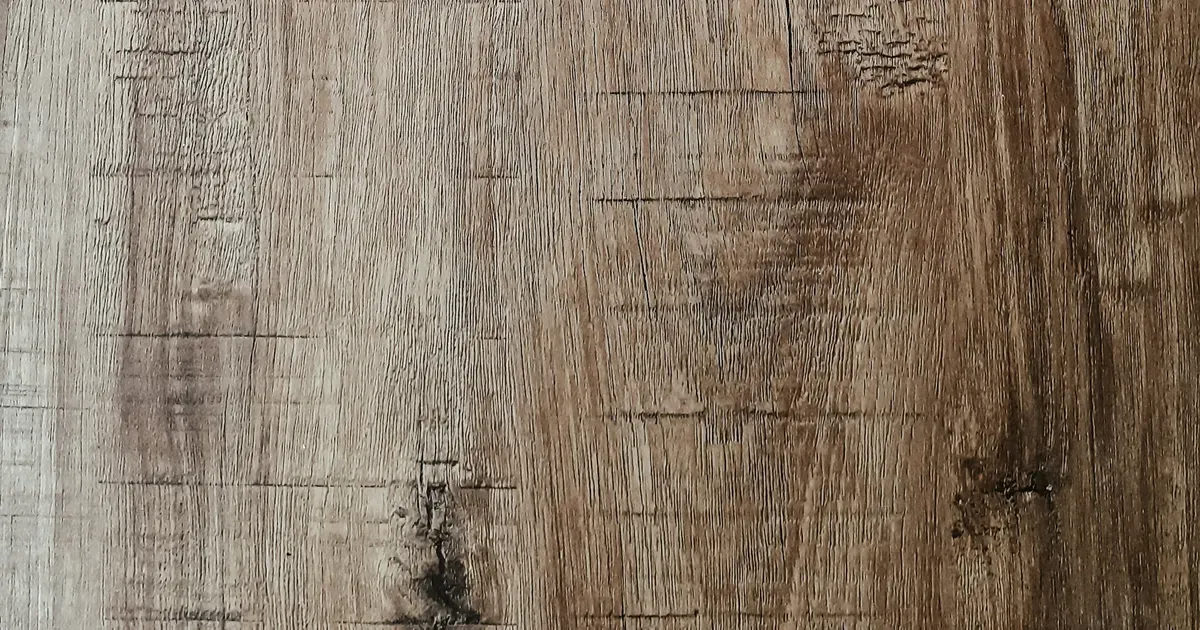
“Wire brushed” on a specification sheet can describe anything from a surface you only notice with your fingertips to a board with grain standing proud enough to catch the light across a room. The word alone does not tell a factory how deep to go, and it does not tell the buyer what will arrive. This article explains how wire brushing works on oak, how the brushing levels on our Specify page differ, what depth does to grain, color, cleaning and wear, and how to fix the level on an approved sample so the production lot matches it.
How wire brushing works on oak
Each growth ring in oak has two parts. Earlywood forms in spring, grows fast and carries large open pores. Latewood forms later in the season and is denser and harder. White oak is a ring-porous wood, so the difference between the two bands is easy to see and easy to work with.
A brushing machine runs rotating brushes along the length of the board. The bristles remove the softer earlywood faster than the harder latewood, so the latewood is left standing as fine ridges and the pores open up. Loose fibers raised by the brushing are cleaned off before finishing, so the surface reads as textured rather than rough.
How deep the brushing goes depends on the brush, the pressure, the number of passes and the feed speed. Those are machine settings, which is why brushing can be held consistent across a production lot in a way that hand work cannot. At Vu Uy Wood, texture is worked into the wood before finishing; stain and topcoat are then applied and UV-cured on our finishing line.
The cut of the oak changes how brushing looks. On rift and quarter faces the ridges follow straight, tight lines. On plain sawn faces they follow the cathedral arches, so the relief looks broader and more varied across the board.
The brushed levels on our Specify page
Our Specify page lists Smooth and four brushed surfaces. The descriptions in the second column are the ones we work to.
| Surface | Specify page description | Relief you can see | Grain contrast under a stain |
|---|---|---|---|
| Light Wire Brushed | A light brushing that is felt more than seen | Very little | Close to smooth |
| Medium Wire Brushed | A balanced brushing level with visible texture but a restrained overall look | Visible at a low angle | Noticeable |
| Wire Brushed | Deeper brushing that opens the grain and gives the surface stronger texture | Clear from standing height | Strong |
| Wire Brushed with Cross Marks | Brushed, then cross-worked for a more irregular, hand-worked surface | Clear, and less regular | Strong and uneven |
Light Wire Brushed
The face looks almost smooth, but the hand finds the grain. Light brushing takes the hard, flat edge off a smooth floor without changing the overall look, and it softens reflections slightly. It suits Premium and Select grades and interiors that want a natural touch with no visible texture.
Medium Wire Brushed
The texture is visible when light comes in at an angle, and restrained when you look straight down. Medium brushing is a common middle choice for residential work: it adds depth to the color and helps disguise light everyday marks without making the floor look rustic.
Wire Brushed
The deepest of the straight brushing levels. The grain is opened clearly, the ridges cast small shadows, and a stain settles strongly into the open pores. It suits Natural and Rustic grades, relaxed interiors and darker or effect colors, where the relief adds to the character already in the wood.
Wire Brushed with Cross Marks
The board is brushed and then cross-worked, so marks run in more than one direction. The result is less regular and closer to a hand-worked look. It is the nearest listed option for buyers who want an aged surface without moving to a fully hand-scraped or distressed treatment.
What depth does to color
The deeper the brushing, the more stain the opened grain holds compared with the raised latewood. The practical effects:
- Mid tones read deeper and more figured as brushing increases.
- Pale colors gain fine grain lines as pigment settles into the pores, and lose some of their flat look.
- Dark colors show brushing mainly as relief and highlights on the ridges.
- Sheen reads lower on deeper brushing, because the relief scatters reflections.
A color approved on Light Wire Brushed will not look the same on Wire Brushed, even with the same stain and topcoat. Our article on how texture changes floor color explains the mechanism in more detail, and the sheen side is covered in Matte, Extra Matte or Ultra Matte.
Cleaning and daily wear
| Level | Light marks and scuffs | Fine dirt in the grain | Cleaning note |
|---|---|---|---|
| Light Wire Brushed | Slightly softened | Very little | Close to a smooth floor |
| Medium Wire Brushed | Better disguised | Some | Regular dry clean |
| Wire Brushed | Well disguised | More | Soft brush attachment helps |
| Wire Brushed with Cross Marks | Well disguised | More, in several directions | Soft brush attachment helps |
These are general observations, not performance figures. Brushing changes how visible wear is. It does not change how the finish performs, which depends on the finish system. Owners who keep kitchens and entrances very clean may prefer a lighter level; owners with pets and heavy family traffic often prefer a deeper one because marks blend in.
Brushing and the wear layer
Brushing removes wood from the face, and on an engineered board that wood is the oak wear layer. Light brushing takes very little. Deeper brushing takes more in the earlywood bands. Wear layer options on our pages are 1/16” (2mm), 1/8” (3mm), 5/32” (4mm) and 1/4” (6mm) sawn, with other thicknesses made to order. A thicker layer gives room for deeper texture and for a future sanding.
When the floor is later sanded back for refinishing, the brushing is removed with the finish. Recreating it on site is a separate job for the finisher. If the brushed look is central to the design, the owner should know that before the floor is laid. For the wider choice between textured and smooth, see wire-brushed vs smooth oak flooring.
Brushing in herringbone and chevron
Brushing runs along each block, so in herringbone and chevron its direction changes block by block. Alternating blocks catch the light differently, and deeper brushing strengthens that alternating tone. Approve pattern floors on a sample that shows several blocks laid together, not on a single plank.
Approving the level on a sample
- Name the level exactly. Write “Medium Wire Brushed”, not “brushed” or “textured”.
- Ask for the sample in the production construction and finish. Color, sheen and finish system should match the order.
- If you are between two levels, compare them side by side in the same color, so only the brushing changes.
- Review several boards in daylight and in the project’s light, from standing height and from a low angle.
- Write the level on the approval together with color, sheen, grade and finish system.
At Vu Uy Wood, the approved sample becomes the master reference, and surface inspection checks texture and sheen across the production lot against it. If you are comparing brushing with scraped or saw mark surfaces, our guide to oak flooring surface treatments sets them side by side.
Working with Vu Uy Wood
Vu Uy Wood manufactures made-to-order solid and engineered French White Oak flooring in Song Than 3 Industrial Park, Ho Chi Minh City, and has done so since 2006. Smooth and the four brushed surfaces are chosen together with sheen and finish on the Specify page, and any of the 211 colors in the color library can be sampled on the brushing level you plan to order. We normally reply within one working day.