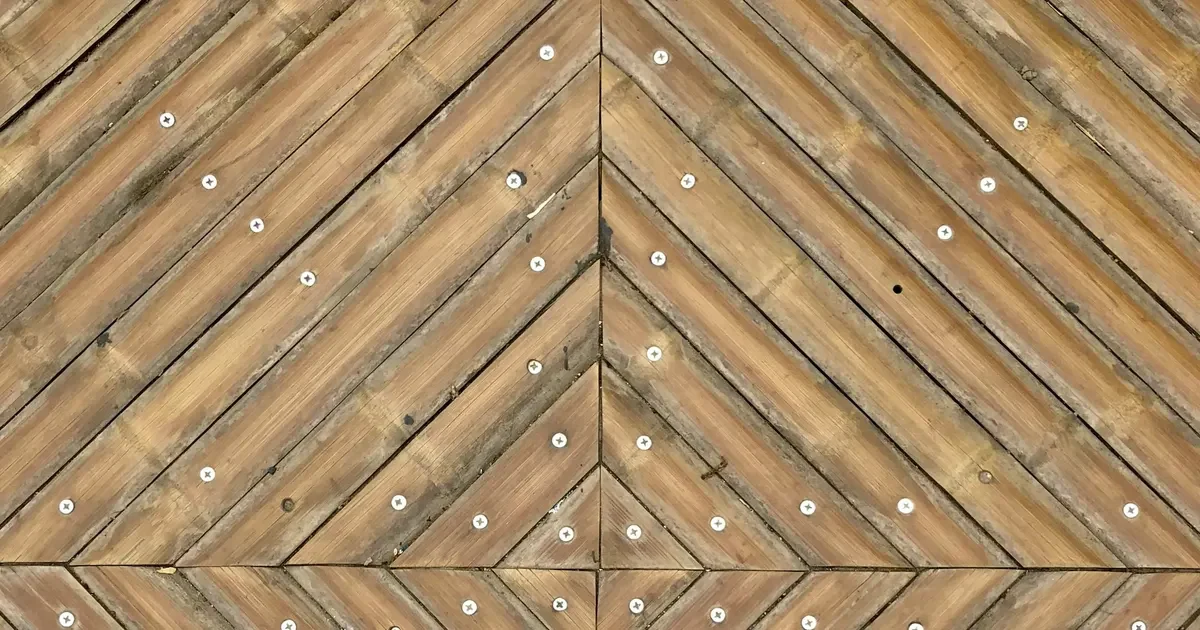
Bamboo and engineered oak often end up on the same shortlist, but they are very different materials. Bamboo is a grass that is cut into strips or shredded into fibers and rebuilt into a board with adhesive. Engineered oak is a layer of sawn or sliced timber bonded to a stable core. This guide compares the two on construction, look, color, hardness, movement and refinishing, so a buyer can decide which one a project actually needs. Vu Uy Wood makes oak flooring only, so where bamboo is the better fit we say so plainly.
How each floor is made
Bamboo
Bamboo flooring starts as hollow culms. The culms are split into strips, the outer skin and inner pith are removed, and the strips are dried and treated. From there, three main constructions are common:
- Horizontal bamboo. Strips are laid flat and glued side by side, so the face shows the wide side of the strip and the knuckle-like nodes.
- Vertical bamboo. Strips are turned on edge and glued together, so the face shows a pattern of narrow, even lines.
- Strand woven bamboo. The fibers are shredded, mixed with adhesive and pressed into a dense block under heat and pressure, then cut into boards. The face has a fibrous, striated look that some compare to exotic hardwoods.
Bamboo is also sold as an engineered product, with a thin bamboo face over a separate core. Color is either natural, or darkened by a heat and steam process usually called carbonizing, or stained.
Engineered oak
An engineered oak board has a real oak face over a core. At Vu Uy Wood we make two engineered builds and a solid board:
- 2-layer: a sawn oak wear layer bonded to a stable plywood core.
- 3-layer: an oak wear layer over a cross-layered core with a backing layer.
- Solid: one piece of oak through the full thickness.
Our two standard engineered builds are 5/8” (15mm) overall with a 3mm sawn wear layer and 3/4” (20mm) overall with a 6mm sawn wear layer. Other thicknesses from 3/8” (10mm) to 13/16” (21mm) are made to order. All boards are machined with tongue and groove (T&G).
Side by side
| Property | Horizontal and vertical bamboo | Strand woven bamboo | Engineered oak |
|---|---|---|---|
| Raw material | Bamboo strips, glued | Shredded bamboo fiber, pressed with adhesive | Oak face bonded to a core |
| Face look | Nodes or fine even lines | Striated, fibrous | Oak grain, rays, knots by grade |
| Board-to-board variation | Low | Moderate | Set by grade and cut |
| Color route | Natural, carbonized, stained | Natural, carbonized, stained | Clear, stained, effect finishes |
| Texture options | Limited, mostly smooth or scraped | Smooth or scraped | Smooth to wire brushed with cross marks |
| Formats | Mostly plank | Mostly plank | Plank, herringbone, chevron, parquet |
| Refinishing | Possible on full-thickness boards | Possible on full-thickness boards | Depends on wear layer thickness |
Bamboo products vary widely, so the maker’s data sheet is the reference for any specific board.
Look and character
The clearest difference is visual. Bamboo reads as linear and regular. Horizontal bamboo has a repeating node pattern, vertical bamboo has close parallel lines, and strand woven has a streaky grain with darker and lighter fibers. The look is consistent from board to board.
Oak reads as timber. Plain sawn faces show cathedral figure, rift and quarter faces show straight lines with the ray fleck white oak is known for, and grade decides how many knots and how much color movement remain. A Premium face is quiet, a Rustic face is lively. That range lets a designer choose how much character the floor carries, from almost plain to strongly natural. Our guide to French white oak flooring explains what the timber brings to the face.
Color range
Bamboo color is usually set by the processing route: pale natural, a warmer amber from carbonizing, or a stain over either.
Oak takes a much wider palette because its base color is pale and fairly neutral and its open pores carry stain well. Our library holds 211 colors in seven collections, from clear oak to deep smoked browns and grays, and colors outside the library can be developed against your own reference. Effect finishes such as smoke, wash or two-tone reactions use the way oak responds unevenly across its grain. You can browse the range on the Colors page.
Hardness: read the claims carefully
Hardness is where the two are most often compared, and where the comparison is most often confused.
- Strand woven bamboo is very dense because the fibers are compressed with adhesive, and makers often publish high Janka figures for it.
- Horizontal and vertical bamboo are usually published lower than strand woven, and carbonized bamboo is generally softer than natural bamboo, because the heat process changes the fiber.
- White oak sits in the middle to upper range of common flooring timbers.
Three cautions apply. First, a Janka figure measures dent resistance of the material, not scratch or abrasion resistance, which depend mostly on the finish. Second, published bamboo figures come from many different products and test sources, so they are not directly comparable unless the test report is for the exact product. Third, on an engineered board, the support under the face matters as much as the face. Our article on white oak Janka hardness explains how to read the number in real rooms.
Movement and moisture
Both materials move with humidity. Oak’s behavior is well documented: it swells across the grain as it takes on moisture and shrinks as it dries, and an engineered core restrains that movement in the face. Bamboo’s movement depends heavily on the construction and the adhesive, and dense strand woven boards can be sensitive to changes in humidity. For either material, acclimation, site conditions and installation limits belong to the maker’s instructions, NWFA guidance where it applies, and the installer.
Neither material belongs in a permanently wet area. Our article on wood flooring in bathrooms covers where engineered oak works in a wet room and where another floor is the better choice.
Refinishing and service life
A solid bamboo board or a full-thickness strand woven board can usually be sanded and refinished, though the dense, resin-rich surface of strand woven needs the right abrasives and a finish compatible with it. Engineered bamboo with a thin face may allow little or no sanding.
For engineered oak, the wear layer decides refinishing. A 6mm sawn wear layer leaves more material for future sanding than a 3mm one, and a solid board leaves the most. The wear layer guide sets out the options.
Emissions and documents
Both floors contain adhesive, bamboo in every board and engineered oak in the core and bond line. Ask for the emissions documentation your market requires. For engineered oak, CARB P2 is the reference we work with for the composite core. For a bamboo product, ask the maker the same question and request the document, not only a statement.
When each one fits
Bamboo can be the better fit where:
- The design calls for a uniform, linear look with little variation between boards.
- The budget favors a standard plank in a small set of natural or carbonized tones.
- The specifier wants a dense, hard surface and has a test report for the exact product.
Engineered oak is the better fit where:
- The floor needs a timber look with grain, ray fleck and a chosen level of character.
- The project needs a specific color, a texture such as wire brushing, or a matched color across formats.
- The design uses herringbone, chevron or parquet, or wider boards.
- Future sanding and refinishing are part of the plan.
Questions to ask either supplier
- What is the construction, and how thick is the sandable face?
- Which hardness test applies to this exact product?
- Which installation methods are approved?
- What emissions documentation is supplied for my market?
Working with Vu Uy Wood
Vu Uy Wood manufactures solid and engineered French White Oak flooring to buyer specification in Song Than 3 Industrial Park, Ho Chi Minh City, and has done so since 2006. We do not make bamboo flooring. If oak suits your project, the Specify page sets construction, format, width, grade and finish and turns them into a written brief for quotation. We normally reply within one working day.